Testimonials
RED Equipment Head of Design Takes on UltraSwim 33.3
Phil Hawthorne, head of design at RED Equipment, takes on the UltraSwim 33.3 challenge.
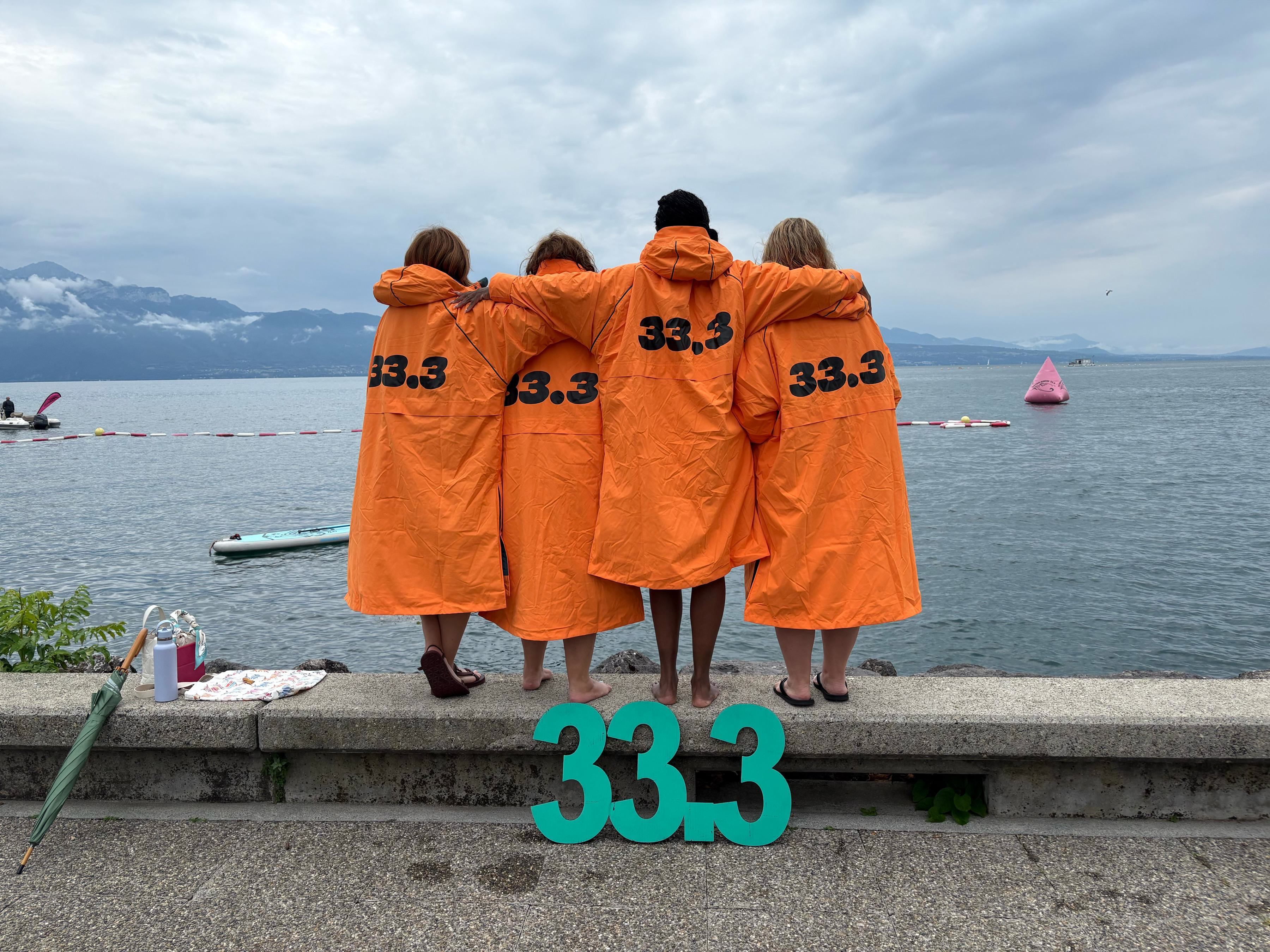
With no plans to take on an ultra-swim - and a background in sprint swimming, not endurance - Phil, Head of Design and ESG at Red Equipment, quickly discovered that a passing thought had evolved into a powerful personal mission. This is the story of how Phil Hawthorne conquered an UltraSwim 33.3 in Croatia.
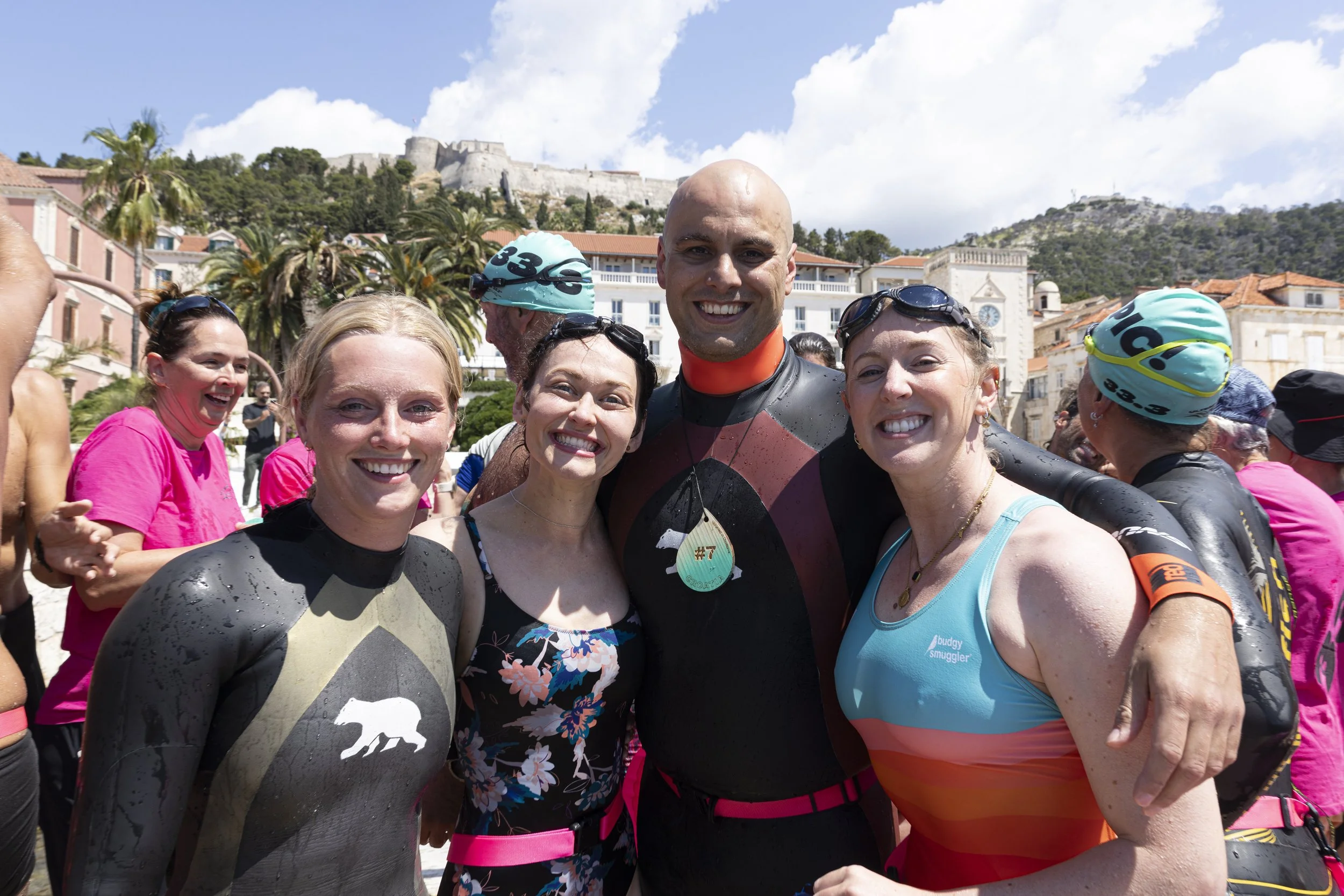
The RED team at the finish line of #7Croatia
How did you feel leading up to the event?
Leading up to the event, I was training as much as I could in and around family and work commitments, and to be honest, I don’t think I could have done much more without it negatively impacting those areas. I was getting a little stressed at not being able to perform at the same level I had in previous years, but then I reminded myself this is just a different chapter in my life, and I was a lot younger and fitter back then. Even so, I was training as hard and as often as I could, and I was happy with what I’d been doing.
With regards to the actual physical event, I was fortunate enough to attend the pre-camp a day or two before the actual race began. This gave me and a group who were a little more unsure the chance to have a look at the event locations and dip our toes in the water. Being able to have some quick local dips to acclimatise to the environment was a great experience, especially as I’d never really swum in open water before. It definitely helped alleviate some slight “niggles.”
Discover our pre event camps here
How do you plan to handle moments of doubt or fatigue during the swim?
I think the biggest thing for me will be reminding myself where I am and what I’m doing—it’s an absolutely incredible adventure. My natural instinct when swimming or racing is to go out hard and fast. But that’s not what this swim is about. As my wife reminds me, just taking part is a privilege. And truthfully, it’s not even all about the swim.
A method I’ve used—and shared with my team—is the ABC method for motivation and resilience. I’ve found it helpful to write this down and reflect on it from time to time, but I imagine I’ll be running through it in my head when things start to hurt.
A is for Achievement – this is about listing all the things I’ve achieved or am currently achieving in life. They don’t need to be huge milestones; even the smallest wins count, as long as they’re mine.
B is for Belonging – this is thinking about the groups and communities I’m part of, like family, work, the swim squad, friends—all the people I’m connected to.
C is for Control – these are the things I have control over in my life, no matter how small or seemingly insignificant. If it’s something I can manage or influence, it matters.
Over time, I’ve noticed that the number of things in each of these areas can rise and fall, which is why I try to stay aware of them—writing them down on my phone helps. When someone feels low or demotivated, it’s often because one of these areas is out of balance. Taking the time to check in and boost those areas can be incredibly empowering. Resilience, I’ve found, often comes from knowing that even if one area is depleted, I can draw strength from the others. That’s exactly what I’ll be doing during the swim—especially during those tougher stretches.
How did the atmosphere and support from others affect your experience?
The UltraSwim 33.3 group were amazing! The team were the pinnacle of professionalism, and the swimmers were so open and friendly! I had been told that many triathlon events were quite focused and competitive, which I completely understand, but that wasn’t what I wanted or needed, so I wasn’t fully sure what to expect. I was pleasantly surprised when everyone I met was in the same boat, with some having obviously done a lot more training than I had, but most not having done as much and really just being in it for the adventure!
Chatting to all these people from literally all over the world — the US, Brazil, Australia, the UK, France, Spain — was amazing. So many different stories, so many reasons why, but we were all about to get in, which was great!
How did completing the event make you feel?
I’m really glad I finished! My biggest concern was that I’d race out and then run out of energy at some point along the race and have to abandon, which would have been catastrophic for me personally. Instead, I was able to keep a steady, comfortable pace and just click into the zone. I did have to try really hard at times, especially when I passed people or if people passed me, as I did find myself immediately pulling in front of them, but then I remembered that it’s a marathon, not a sprint! I’m really happy I didn’t get too carried away and was able to hold what I thought was a good pace.
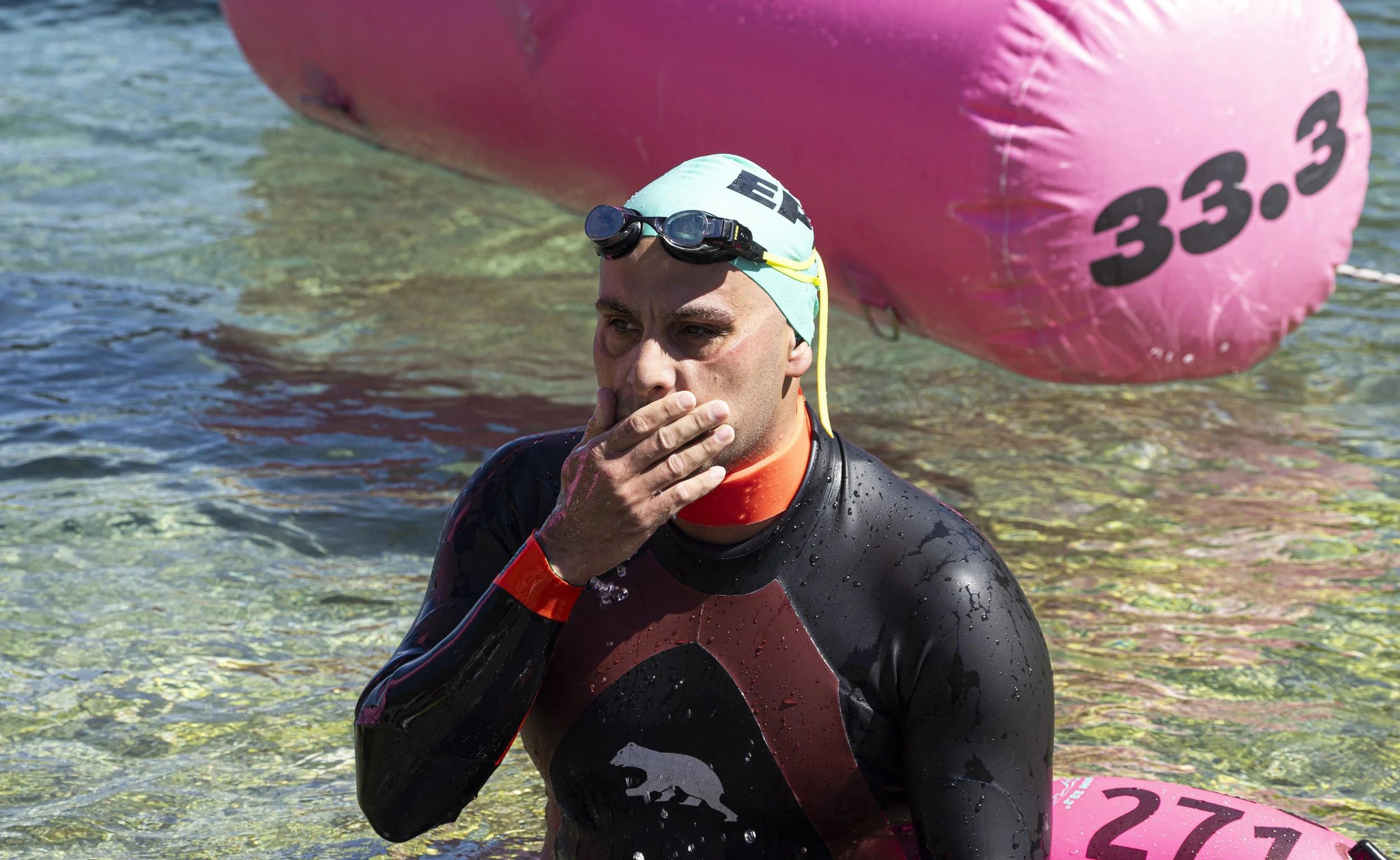
Phil crossing the finish line #7Croatia
What’s next for you after completing the UltraSwim 33.3?
I’ve been thinking about that recently, and I would really like to swim the Channel. I’ve always wanted to, I suppose because in my head it’s the equivalent of the London Marathon, but for swimmers — and I’m not very good at running. I know several people who have swum it, and I know I could do it. However, I realise it’s probably not a good idea to just turn up and jump in. I know there’s a lot of research, training, and admin to do to prepare for an event like that, so I think as I start working towards that, it would be a good idea to get some smaller events in beforehand. There’s so much more to learn, and I think my understanding will only grow with each event I take part in.
I’d also love to take part in another UltraSwim 33.3 because it was such an amazing experience. I’d then either work on my times or, what would be appealing, is to see if I can swim a much longer distance in one go, which I know the team can facilitate. This would also help me gain new insights into swimming further, especially as I work towards my Channel swim goal.
Discover our ULTIMATE race format, the perfect preparation for the English Channel, exclusive to Croatia.
This blog include’s excerpts taken from Red’s articles about Phil’s journey
MORE FROM THE WATER