
Keeping Injury Free with Neil Maclean - Martin
Neil Maclean Martin is a clinical specialist in Musculoskeletal sports injuries, an injury prevention expert for the professional athlete to the weekend warrior, He is also the team physiotherapist for UltraSwim 33.3.

Long distance swimmers do a lot of repetitive movements that carry injury risk. Neil Maclean-Martin tells us how to reduce that risk
What are the key causes of injury of a lifetime in swimming and what strategies should you adopt to maximise your chances of being about to swim into old age?
This has been well researched over the years and remains very consistent in the messaging. If we exclude trauma ( such as hand injuries from swimming into the end of the lane) and focus on the gradual onset niggles, then there are very good preventative measures to be taken. To note, 50-90% of injuries will affect the shoulder. The neck and back come next.
Stroke Mechanics
It’s a really good idea to get your technique checked out and work on it. Head position, body rotation, catch and pull are just some of the areas to look at.
Proper Planning
Making a plan allows you to gradually build up and ease off for events. If you make changes too quickly it can lead to overload and injury.
Body Maintenance
Make time, even just 10 minuets a day, to work on some preventative training. The main areas to cover are thoracic (middle back) mobility, scapula ( shoulder blade) stability, and core and rotator cuff strength.
When increasing your training for a specific challenge, what additional strategies should you adopt to minimise injury risk?
Training alone doesn’t make you fitter. In fact, it makes you weaker. What makes us fitter is the recovery process and super compensation. That it, the process where the body makes itself stronger so the next time we do the same session, it has less impact on us and we can go faster or longer for the same effort or energy.
It’s therefore, recovery that makes the difference. Elite swimmers sleep and rest a lot! Prioritise getting to sleep a little earlier and work on the quality of sleep.
This is hard. With more training and more sleep there is less time in the day for other activities, such as work. Still, try to keep up on you other good habits of eating enough to fuel workouts and recovery, as well as mobility work and prehab as you need it most when ramping up your training.
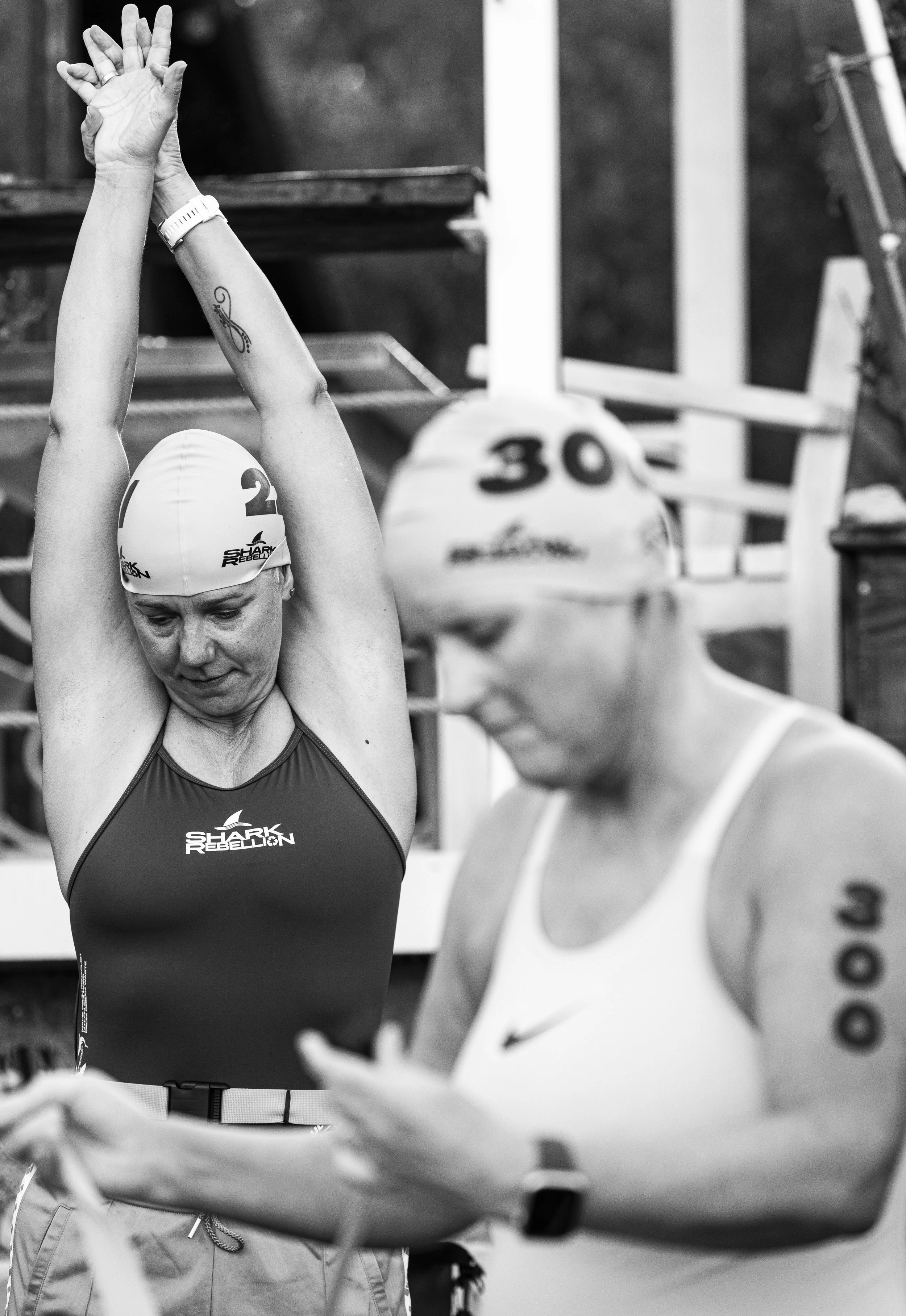
‘Try a quick mobility session with your go-to stretches’
Additionally avoiding alcohol (yes boring) will mean your body is focussing its energy on building up itself and not dealing with the inflammation from the booze. Enjoy your beer even more after the event!
During a long or multi-day swim, what can you do to avoid injury?
Have fun during the event but keep good discipline. Be organised and use systems and checklists so you have less stress on the day. Pack your bags the night before. Make sure you get some immediate recovery nutrition after racing. This should be protein and carb based. Lots of good drinks, bars and real food options are available. Ideally get this in 15 minutes after finishing swimming.
Taking a short walk afterwards will help keep your heart rate a little elevated. This can help the body clear waste metabolites. Swimming hard or pushing hard at the end will accumulate some lactate and walking will help the body clear this. Try a quick mobility session after with your go to stretches for best effect.
When should you stop swimming? How can you tell the difference between an injury that might leave you sore for a few days and one that might cause permanent damage?
This is key, so listen up! Most swimmers swim with niggles. Ninety percent will have some ‘niggle’ every year. Niggles come and go and and they are not too intense, often they ease off once you go through your warm up. If these niggles develop, they go through stages:
The niggles ache a little after training
They don’t ease off during the session
They become more severe
They then hurt the following morning
Finally, they hurt all the time and with normal day to day stuff, not just swimming
It’s good to be self-aware and think about the overall trend. Is it getting better or worse? Am I feeling it when I’m not swimming? The trick is not getting paranoid; most of the niggles are just that.
My advice is as follows. Should the pain get more intense, be felt outside of swimming and certainly felt the next morning, you must act. Take time to look at your training. What’s changed? It might be those new intervals or a new longer swim, perhaps the total distance done that week.
The good news is that by modifying some of those factors you might keep swimming. If, however, pain is not changing or still getting worse, act quickly and get it checked by a physio. There is lots we can do to help identify and treat the injury either with manual techniques or a combination of load management, mobility and strength.
Neil is building a fantastic understanding and database on swimming related injuries through his close association with UltraSwim 33.3 and will also do a remote over video assessment to support your build up to any big swim.
This article is from our FLOW magazine, read the full issue to discover more articles, expert tips and testimonials
