Testimonials
Swimming Towards the Rainbow: Lessons from Croatia
Nuno António, three time UltraSwim 33.3 participant, shares his experience of #12Croatia and shows us that even when things don’t go to plan, there is always a silver lining.
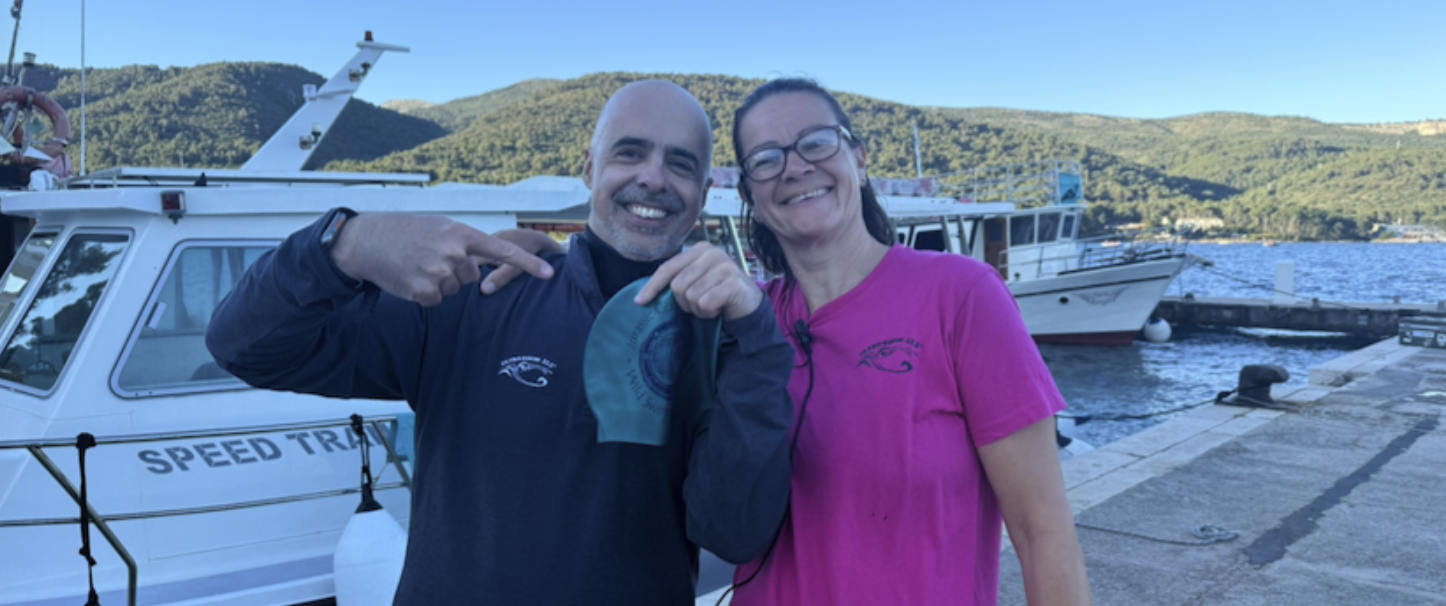
Nuno António, three time UltraSwim 33.3 participant, shares his experience of #12Croatia and shows us that even when things don’t go to plan, there is always a silver lining. He is supporting a special cause that you can read about here.
Why I came to Croatia.
Open water swimming has been an integral part of my life for many years. I do it for many reasons: health, wellbeing, stress management and, in many ways, as a form of meditation.
Croatia #12 was my third UltraSwim 33.3 where we swim the length between Dover and Calais, as the crow flies, the channel distance. I always have a goal for each event I go to. This one was being able to do it despite having undergone a surgery in December which forced me to stop for 6 weeks.
We landed in Split where we stayed the first night and caught the catamaran to the lovely Hvar island early in the morning. Just like it had happened on my first Ultra in Montenegro, back in 2024, the weather was not promising. In fact, this influenced decisively the event and the experience and lessons I took from it. The Ultra runs from Friday to Monday and three fronts were being forecasted with the promise of strong winds and heavy rain which makes the swimming and, above all, the safety kayaks conditions, very harsh and sometimes impossible.
We arrived at Stari Grad on Thursday morning and the sun was shinning. As soon as I could, I went for a swim. The water was at 17C which is borderline for my skins swimming but I went for it without the wetsuit. After the initial cold shock, I felt good and adapted quite well.
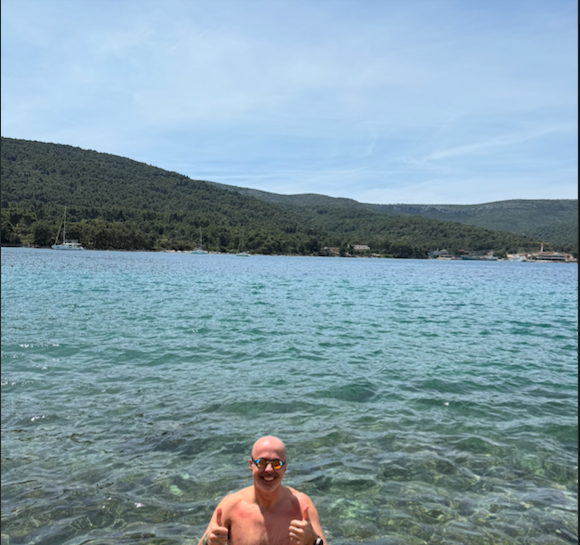
The highlight of the afternoon was meeting the other participants and staff. Fellow swimmers that share this passion and craziness for open waters is a rare and powerful human experience.
Preparation: Training the body, mind and nutrition.
Then came Friday, the first day! Months of physical, mental and nutritional preparation were about to be compressed into the next four days. I followed a training plan set by the Brazilian coach and ultramarathoner Samir Barel. His experience and professionalism are impressive as much as the human touch he puts into the smallest details. Instead of doing a training focused on increasing swimming volume, I followed a more structured plan including a constant mix of endurance, tempo and technique with extensive use of supporting accessories like paddles, pull-buoy, fins and snorkel. After a few months, I was swimming faster than before with my shoulder impingement vulnerability under control.
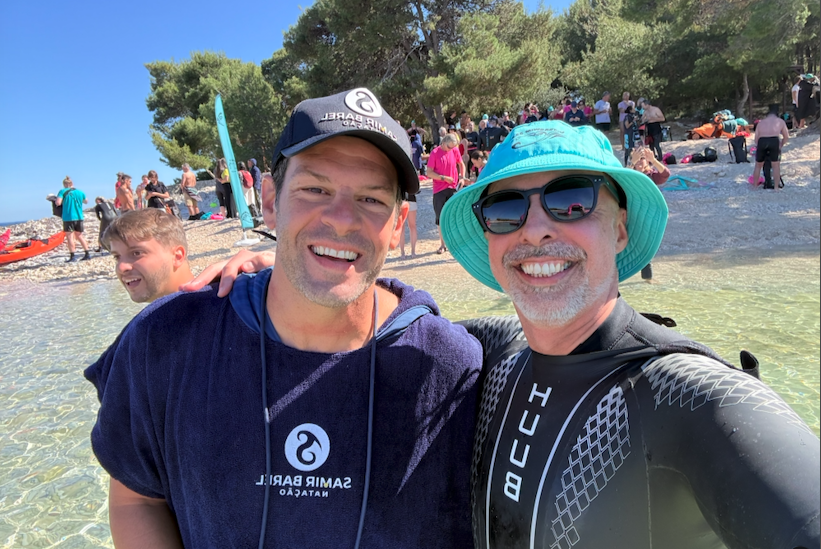
In order to have someone that could help me improve my technique, I contacted, Nick Harris, who gave me fundamental guidance with very good results. He is probably the person that I hear the most in my head during these long swims: “Keep the head close to your arms!”, “Breathe with only one goggle out of the water!”, “Move your arms like if you were in shallow water!”, etc.
Day 1: proof that the plan was working
Day 1 consisted in two swims of 4.7 and 4.6 Km with a short break in the middle. The sea colour was absolutely stunning and I just wish we had a route closer to the coastline to watch the sea bottom. Nevertheless, swimming in this mix or dark and turquoise blue is an experience second to none. I ended up in the 31st place which was surprising for me. I had never been on the first half of the classification table and now I found myself even better – on the first third of it. Samir’s training had produced results.
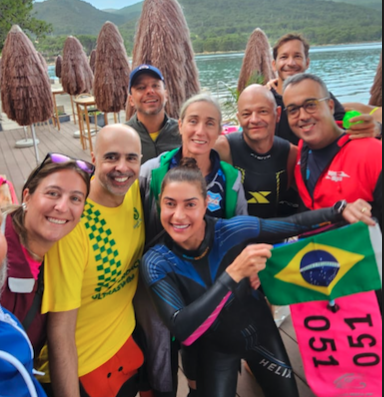
The storm arrives.
Then Saturday came, and with it, the bad weather. All the morning swims had to be cancelled. The safety conditions set by the organisation were not met. We had to wait for the whole day for any window of opportunity. It came at 16:30 and we went for a shorter, 3.2 Km, swim in a more secluded area, in a two loops route.
Although small, this swim produced one of the best experiences of this Ultra. At a certain point it started raining heavily. I love swimming under the rain. However, the magic moment came when it stopped and an absolutely stunning rainbow showed up in the horizon. I was swimming towards the rainbow. What a moment!
The hardest decision.
Finally the big day, the marathon day. The weather was very harsh and frankly borderline regarding the decision to move ahead or not. An 11.3 Km swim was scheduled which ended up to be reduced to an 8.2 Km as part of the planned route was just impossible to be in.
I barely slept the night before, overwhelmed by the thrill. This will have a significant impact on the events that will unfold. I was the first swimmer to be at the starting point and I could spend some time with another great coach, Fay Edgar from the Jurassic Coast Swimming. Everyone was full of excitement. I found myself doing some Karaoke with Ray, a fellow swimmer from Minnesota, US, and a really cool person. We sang the famous “Don’t stop believing” song from Journey.
I stepped into the boat to start the voyage to the starting point which would last about 30 min. It was here that the problems started. The sea conditions were extremely rough and I did not even consider taking a seasickness pill. I tried to distract myself, look into the horizon but I got increasingly sea sick. At a certain point I started vomiting without being able to stop. As a consequence, I got very dehydrated and all the carb reserves intake from the breakfast went away too.
Nevertheless, I still started the race extremely nauseated. “I have swum like this before and got better. I just need to persevere.”, I thought. “I will be better when I reach the first refuelling point which is just in 2 Km. Then I will eat, drink and all be fine!”, I believed… I dragged myself for 2 Km and when I reached the station I was still extremely sick. I tried to drink first but unsuccessfully. I made the only rational decision available to me: I withdrew.
Fortunately, the boat sailor had a warm coat that I could borrow. I had to wait until the last swimmer would pass by and only then the boat would return to the starting point. I am not going to sugarcoat. I was utterly devastated. Although you rationalise and understand that this was the right decision, “Health comes first”, “The sea is not going anywhere, there are more opportunities”, “Everything is a lesson”, etc, your mind also gets deluged with negative thoughts. “Months of training for nothing”, “I am so disappointed in myself”,…
I went back to my hotel room and tried to process all these negative feelings of failure, rationalise and, fundamentally, start the gruelling process of converting this disappointment into energy for the next swim which was happening on the day after. I started using the same mental methodology I use when I start to get tired and with shoulder pain during long swims: Keeping my mind busy with uplifting thoughts. Instead of being resentful for having dropped out, I found comfort on the fact that despite being utterly dehydrated, I still persevered and swam 2 Km, to the first refuelling station. Instead of blaming the weather and bad luck I assimilated the fundamental lesson: I need to take anti-sickness pills next time.
The people who helped me stand up again.
However, the best human experience came from the comfort and support I received from my wife, mom, Samir Barel, Fay Edgar, Neil McLean amongst others (the list would have to be long). Samir helped me rationalise the decision making process, to stand up and to move on. Fay is already a veteran at finding short, simple words that have an extraordinary effect. Neil told me the simple sentence that touched me deeply that day: “If you are devastated it is because this means something to you!”. All this looks almost innocuous when read here but had a huge impact when living the moment.
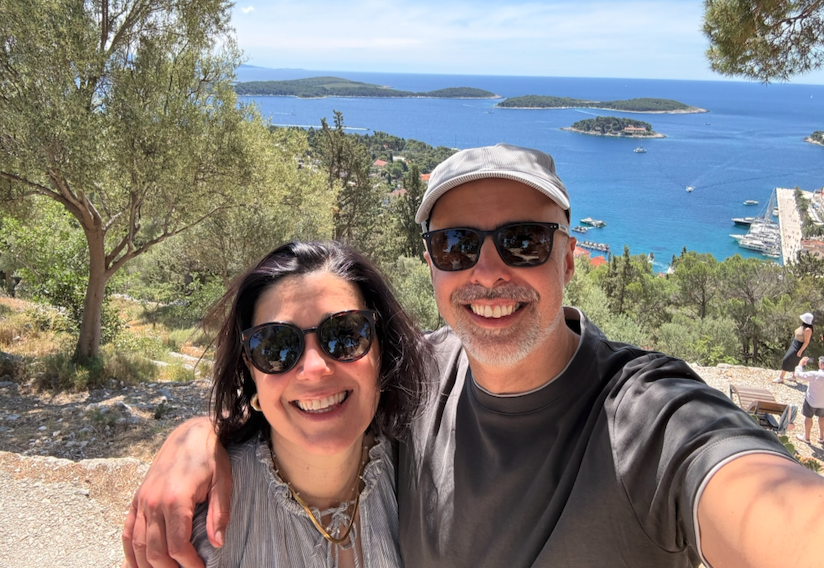
And so, I slept on it and woke up energised on Monday ready for the last 5.5 Km in the beautiful area of Hvar.
The final swim.
We stayed in an hotel that was quite sophisticated. The first funny note of the day happened when the employees were preparing our breakfast at 5:15 am, expecting the swimmers to make a la carte orders: “May I have some eggs Benedict please?” To their surprise, 100% of the swimmers simply wanted porridge, eggs, bread, honey, oats,… and in vast quantities.
Monday was clearly the calm after the storm. The morning was wonderful and the sea was a clear aquamarine blue. I started swimming and promised myself I would have the best performance ever in Open Waters. I was wise enough to talk to Samir before starting who moderated my enthusiasm and recommended me to take it progressively, which I did, with good results.

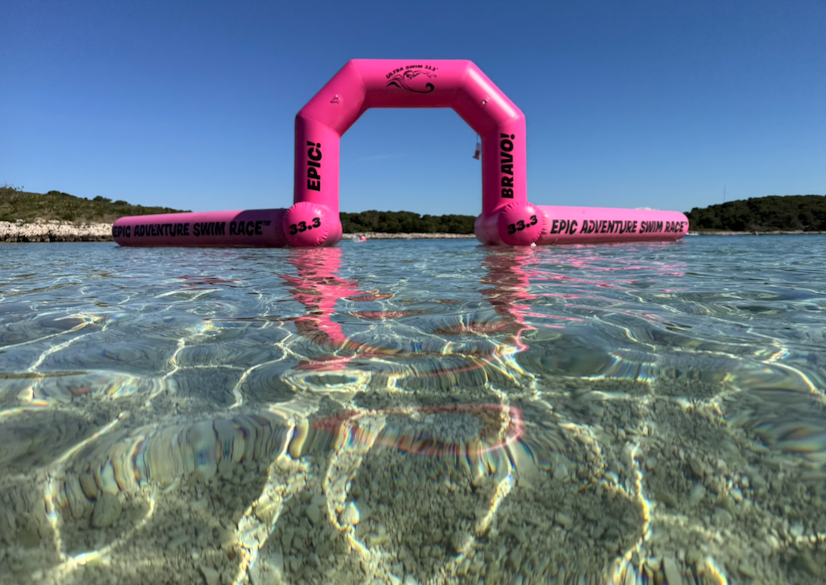
The swim itself was absolutely wonderful. I could see the sea bottom and, at a certain point the sun rays would enter the water and converge into a single spot giving what I imagine to be the closest approximation to a psychedelic experience.
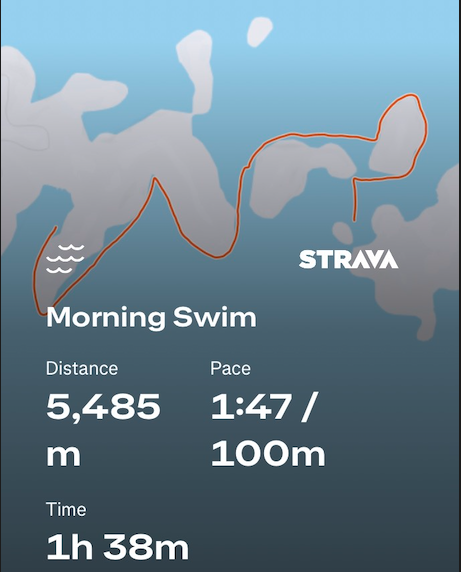
On the second half of the swim, I started accelerating, with the accumulated energy from the day before and passed a number of other swimmers ending up in the 21st place my personal best in these events.
What I learned
1. Preparation matters, but it does not control everything.
Months of training gave me the physical and mental tools to perform. But the sea, the weather and the body still have the final word. Preparation does not eliminate uncertainty. It gives us a better chance of responding well to it.
2. A good plan is not just about volume.
This training block reminded me that progress does not always come from doing more. It often comes from doing the right things consistently: endurance, tempo, technique, recovery and feedback. Structure beats brute force.
3. Stopping can be the most rational decision.
Withdrawing from the marathon swim was emotionally painful, but it was the right decision. There is a difference between resilience and stubbornness. Resilience is not ignoring reality. It is accepting reality quickly enough to make the next good decision.
4. Failure is easier to process when it becomes information.
Once the disappointment settled, the lesson became clear: next time, I need to manage seasickness proactively. A painful experience became useful data. That shift matters.
5. The people around us shape our recovery.
My wife, my mother, Samir, Fay, Neil and many others helped me move from disappointment to perspective. Endurance may look individual from the outside, but nobody really does these things alone.
6. The final swim was not a comeback. It was a continuation.
Monday was not about erasing Sunday. It was about carrying Sunday with me and swimming anyway. That made the final 5.5 km more meaningful than any perfect performance could have been.
7. The sea always teaches humility.
In open water, there is no illusion of full control. You can prepare, plan and execute, but you still need to adapt. That is the lesson I keep taking from swimming into every other part of life.
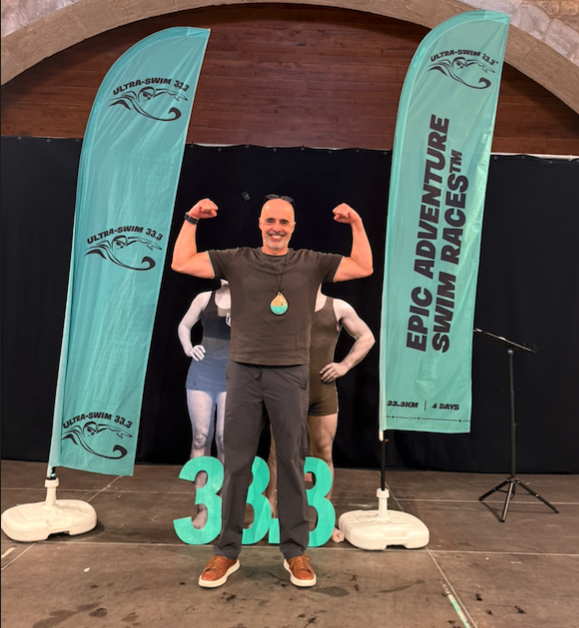
I came to Croatia hoping to complete another UltraSwim 33.3. I left with something more complex and probably more valuable: proof that preparation works, a reminder that the sea does not negotiate, a painful lesson about decision-making under pressure, and a renewed appreciation for the people who help us stand up again.
The final swim did not erase the disappointment of the previous day. It transformed it. And maybe that is the real lesson: resilience is not about avoiding failure. It is about carrying it honestly, learning from it quickly, and still finding the energy to swim the next stretch.
What else did this taught me?
This experience also reminded me how fortunate I am to still be able to move, train, swim and recover. Not everyone has that privilege. At the moment, I am supporting a fundraising campaign for Felisberto, whose recovery journey has become very close to my heart. For as long as the campaign is active, I will share the link alongside this post: https://help-felisberto.com
MORE FROM THE WATER