How to Improve Your Triathlon Swim Time. Practical Gains for Real Athletes.
Whether you are coming from a cycling or running background or simply looking to squeeze more minutes out of your swim leg, these are the high impact changes that deliver real results.
IMPROVE YOUR TRIATHLON SWIM

What Actually Makes a Triathlete Faster in the Water
WHERE GAINS COME FROM
Cyclists and runners who join triathlon often make the mistake of applying the same logic to swimming: more volume equals faster times. But swimming is a technique dependent sport far beyond what cycling or running require. A triathlete who swims 20,000 metres a week with poor technique will almost always be slower than one who swims 10,000 metres with good form and targeted open water practice.
The fastest gains available to most age group triathletes come from correcting stroke mechanics, learning to sight efficiently, practising race specific skills, and developing comfort with open water conditions. Only after those fundamentals are in place does volume become the limiting factor.
A Progressive Approach to Faster Triathlon Swimming
THE IMPROVEMENT PLAN
Month 1: Stroke Diagnosis and Repair. Get filmed underwater. Identify the two or three technique issues costing you the most time, typically poor body rotation, crossed entry, dropped elbow on the pull, or inadequate kick suppression. Work with a coached squad or online video analysis service. Focus exclusively on technique this month. Volume stays moderate: three sessions per week, 2,000 to 2,500m each. Do not swim at race pace yet.
Month 2: Open Water Specific Skills. Move sessions into open water at least twice a week. Practise sighting drills every session, alternating between six stroke and twelve stroke sight intervals. Add drafting practice with a training partner. Swim bilateral breathing and work on straight line navigation. Start building volume to 3,000m per session. Track your open water pace versus pool pace gap and actively close it.
Month 3: Race Specific Conditioning. Introduce threshold sets in the pool: 100m repeats at race pace with short rest. Simulate mass starts in open water with training partners. Practise transitions. Enter an open water swim race or aquathlon before your target triathlon. Nothing replaces race day pressure as a training stimulus.
Month 4: Build and Taper. Peak volume this month: four sessions per week, up to 3,500m per session. Prioritise one long continuous open water swim of 2 to 3km weekly. Then taper: three weeks out, reduce volume by 30 per cent. Two weeks out, reduce by 50 per cent. Race week is quality only, short, sharp, confidence building sets. Trust the training.
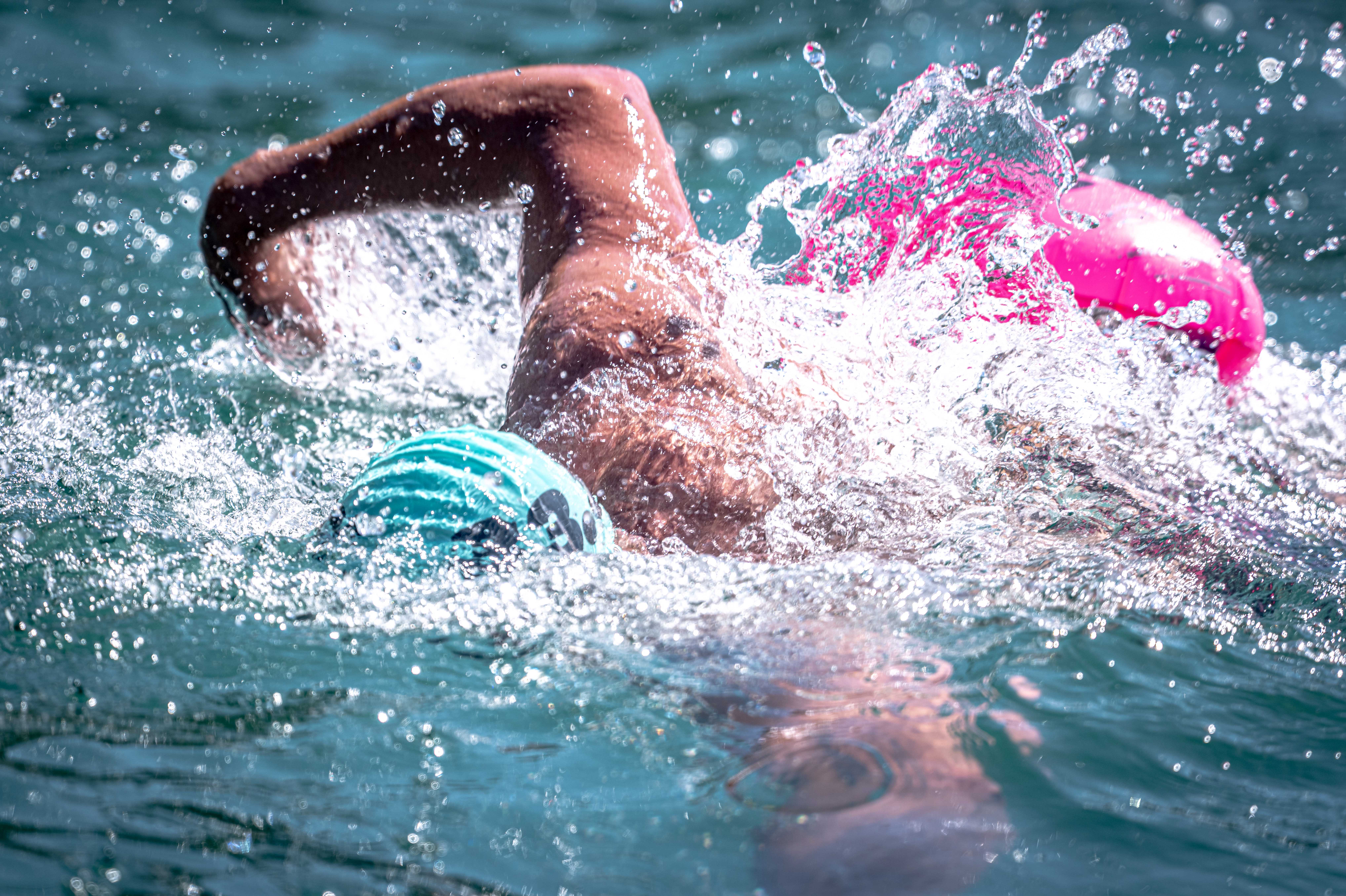
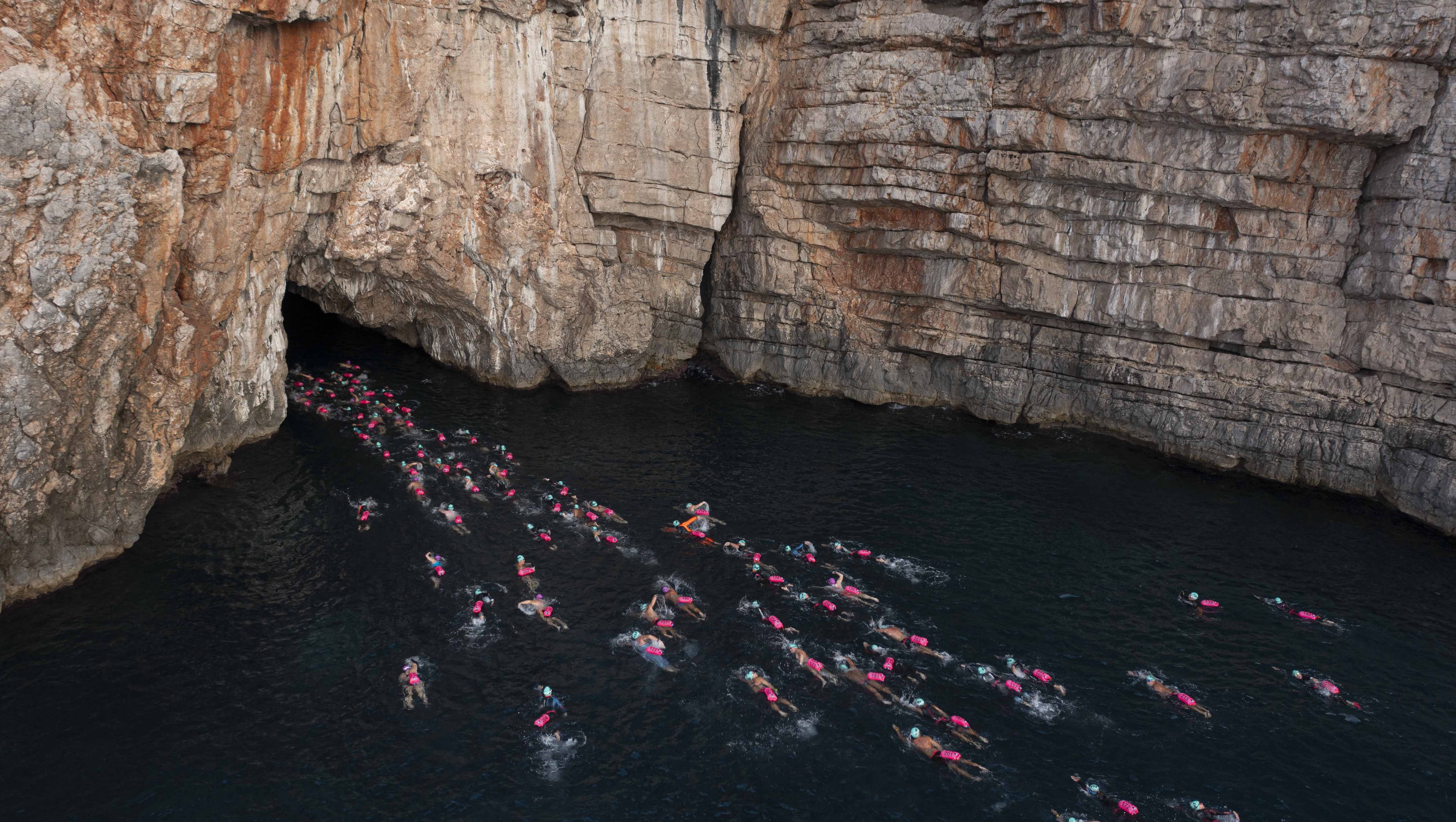
How to train the swim leg in the months before
The plan
Build a base of three to four swims a week, with one longer continuous swim that grows over time. Add open water sessions as the season warms to practise sighting and drafting in real conditions. Do some swims at race effort to teach your body to settle quickly after a hard start. Use a Critical Swim Speed test to set your paces. Then, if you can, book a focused open water block such as a multi day event, where four days of back to back swimming compress months of adaptation into a single breakthrough week.
Three to four swims a week. Open water and race pace. A focused open water block.
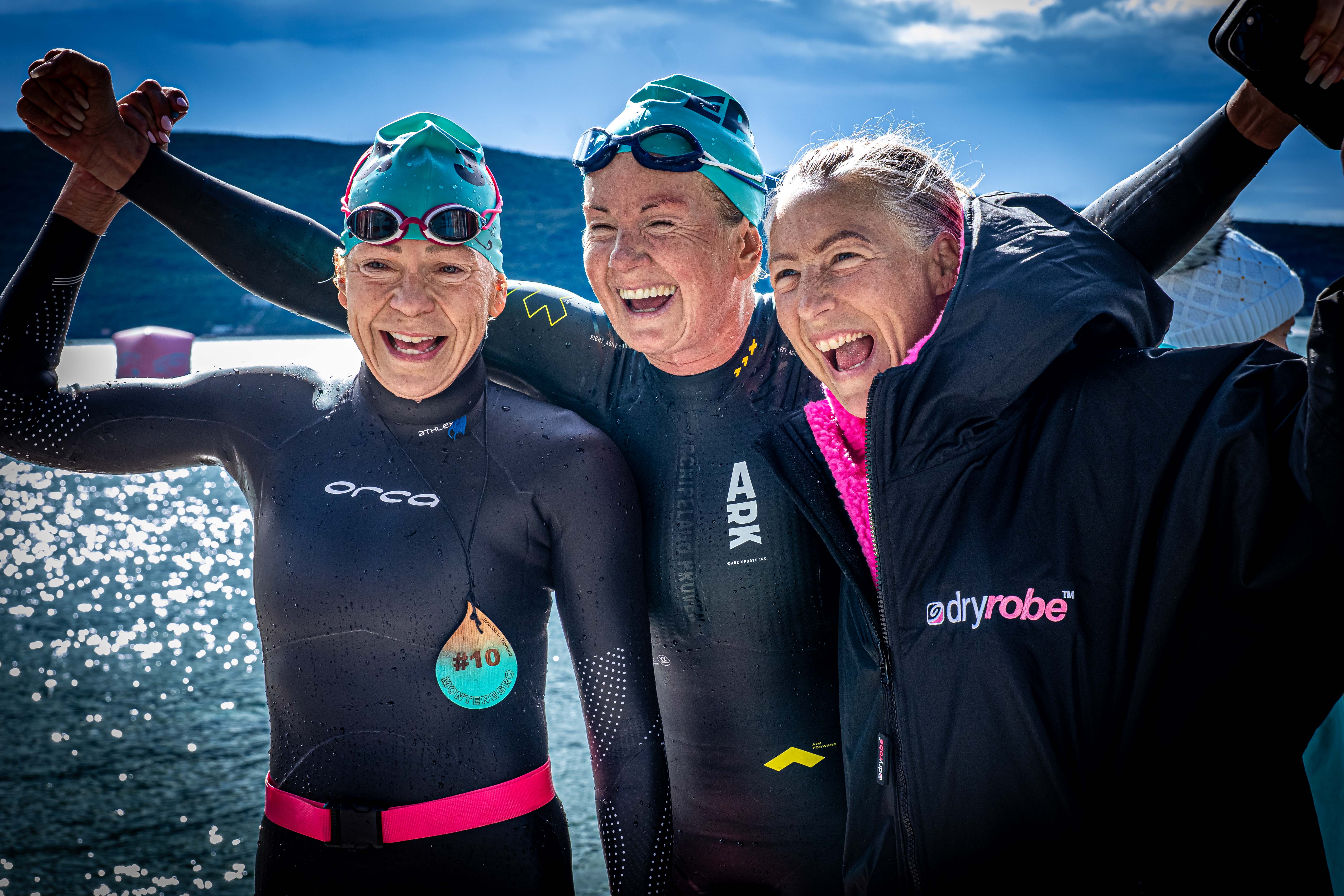
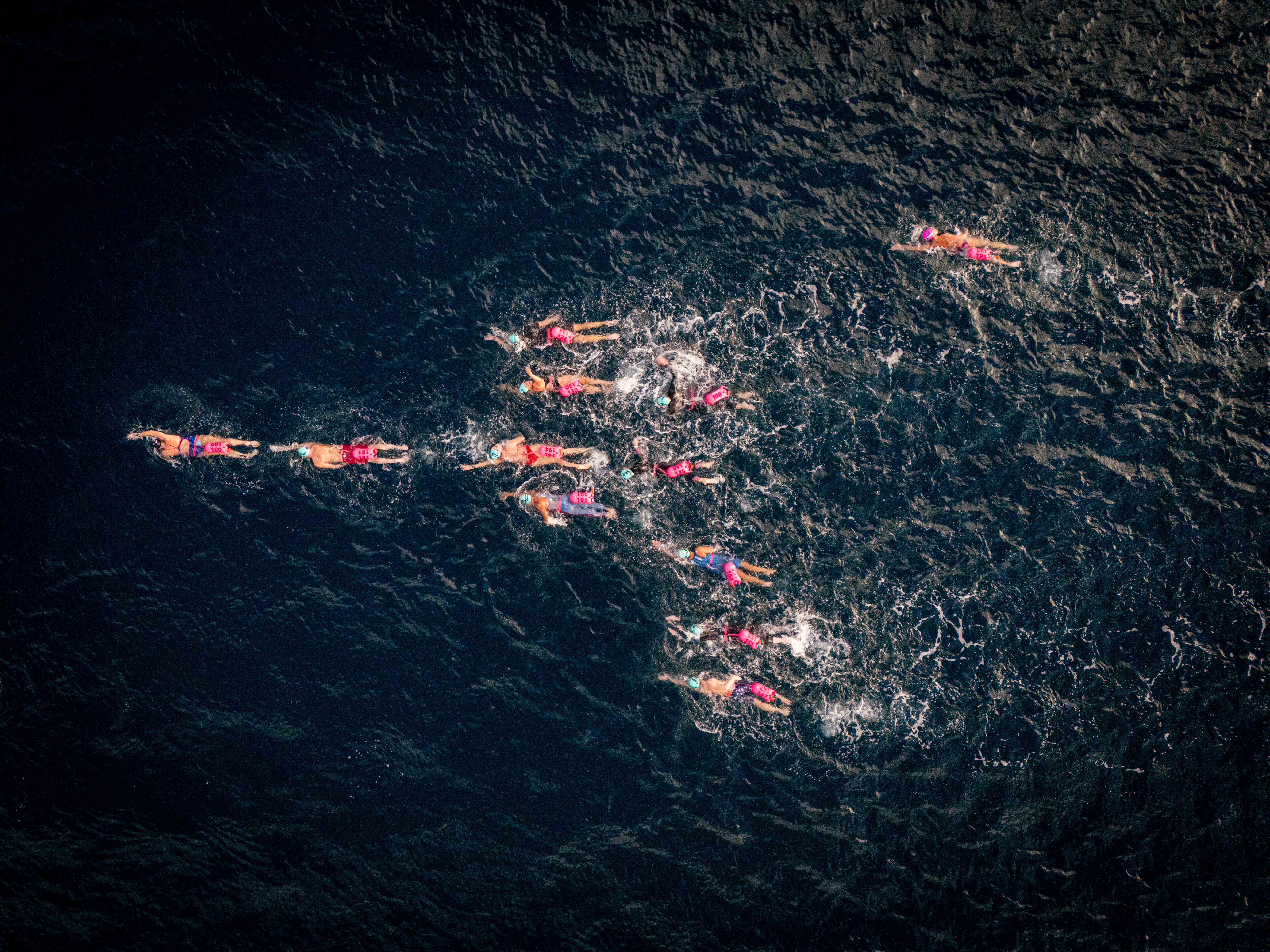
You are never swimming alone
On the water
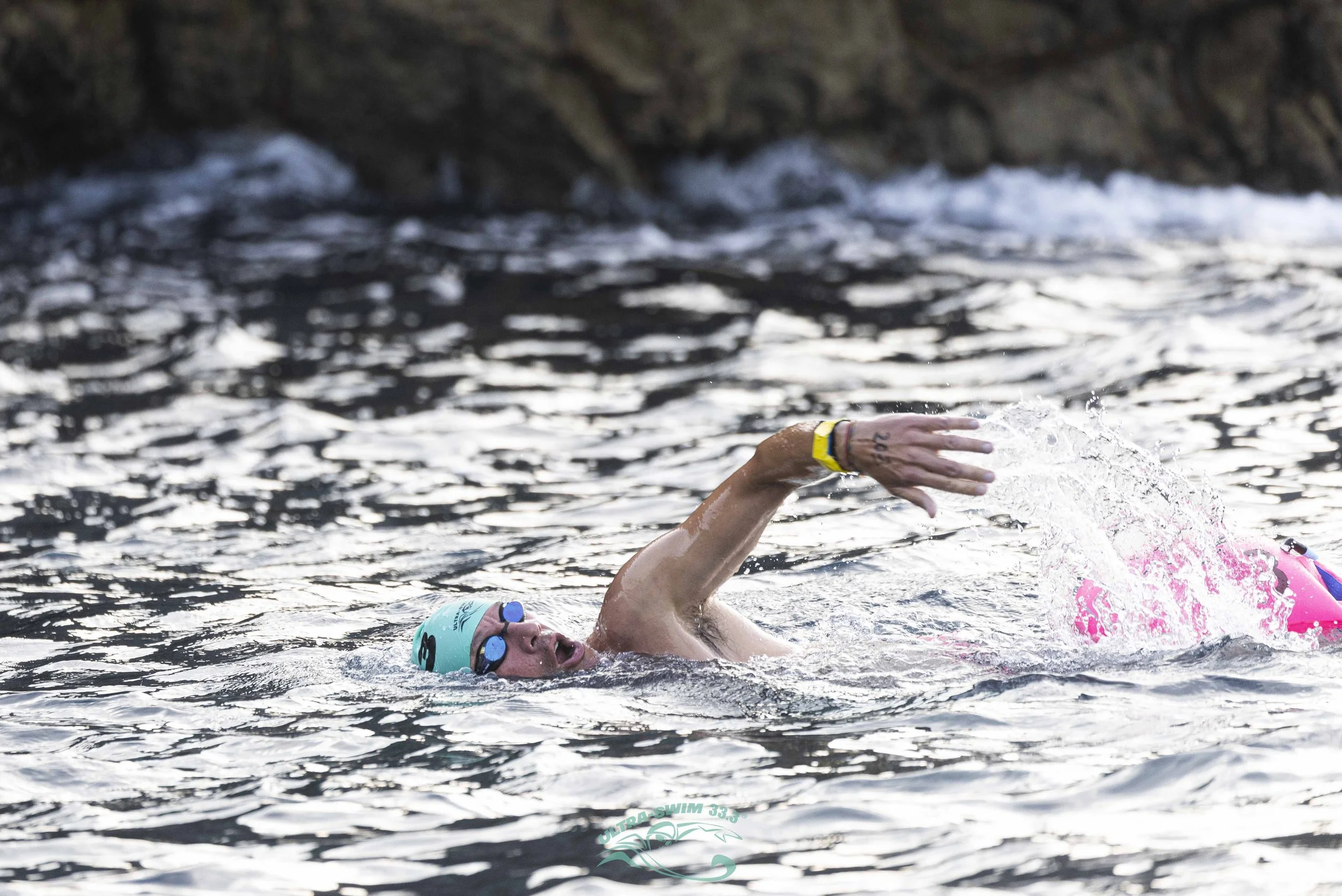
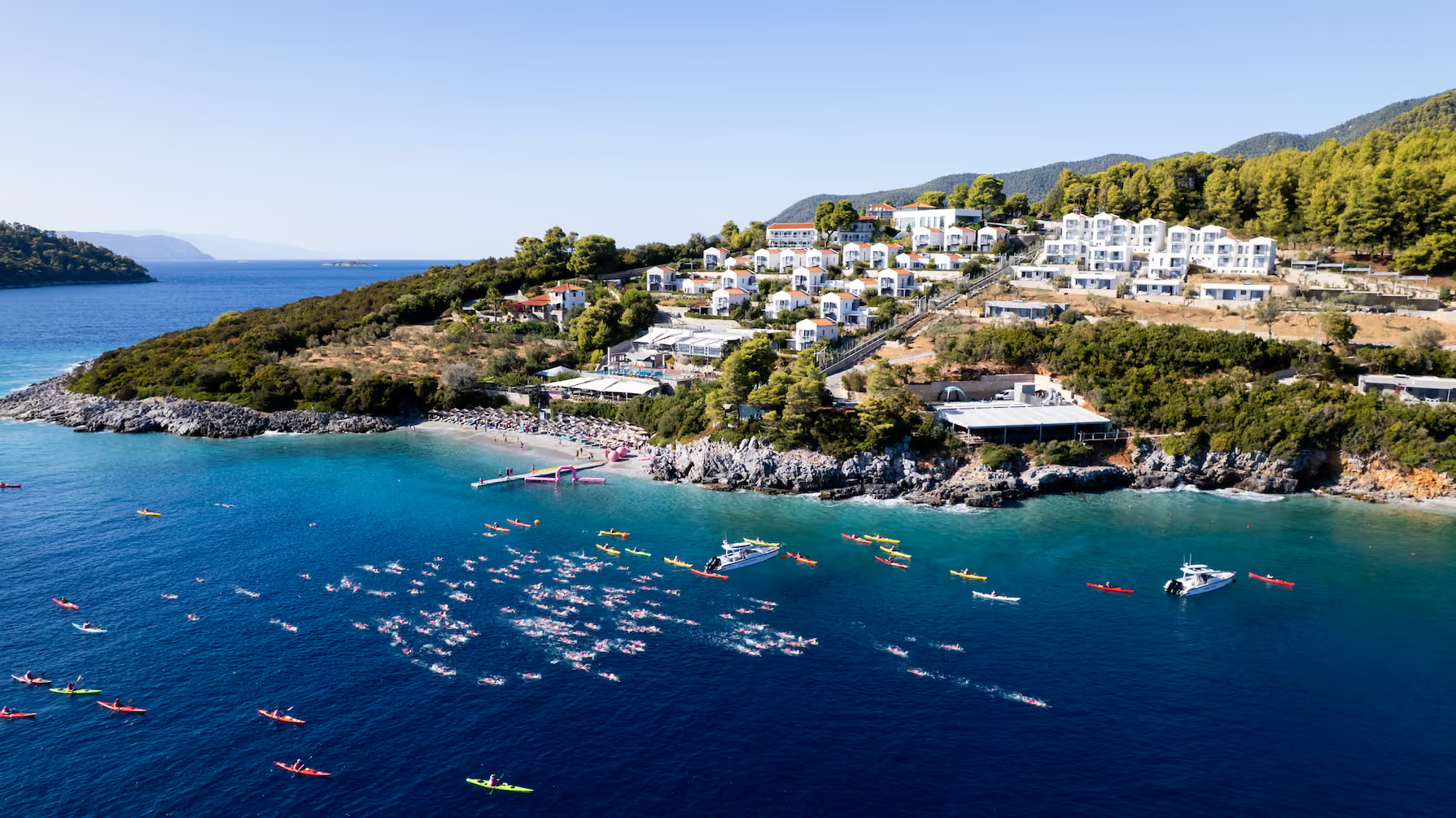
Every UltraSwim 33.3 group swims with two safety boats and two kayaks alongside, GPS tracking and on water feeding, with a medical and physio team on site each day. That cover lets you push your swim hard, knowing help is always a few metres away, and it is exactly the reassurance a triathlete needs to train at the edge of their ability.
Two boats, two kayaks per group. GPS tracking and feeding. Medical and physio on site.
Open water specific drills that close the gap fastest
The compounding effect of open water hours
Pool work develops technique. Open water work develops applied technique. The transfer is not automatic. Three drills move the needle fastest. Sighting every six strokes in chop trains the head lift pattern that pool sessions cannot replicate. Bilateral breathing in current trains the side strength imbalance that costs Ironman swimmers minutes. Drafting practice in tight packs trains the cardiac control that breaks down when sprinting around a swim buoy at race start. Build these into every open water session. Pool sessions still matter for raw fitness, but the technique transfer happens in open water. A dedicated open water event is six months of these drills in four days.
Sighting every six strokes in chop. Bilateral breathing in current. Drafting in tight packs trains cardiac control.
A complete, all inclusive package
What is included
From 1,800 euros, your package covers four days of supported swimming, luxury hotel accommodation, breakfasts and lunches, transfers and a structured preparation programme. Everything is organised so your only job is to swim, recover and improve, making it the most efficient swim block in your triathlon year.
All inclusive from 1,800 euros. Hotel, meals and transfers. Structured preparation.
Improving Your Triathlon Swim, Answered
SWIM QUESTIONS
What is the fastest way to improve my triathlon swim?
Technique first, then consistency. For most age group triathletes, refining body position, catch and breathing yields bigger gains than simply swimming harder. Add two to three focused swims a week and the improvement compounds quickly.
How do I stop fading on the swim leg?
Usually it is pacing and efficiency rather than fitness. Start controlled rather than sprinting the first 200m, settle into a rhythm you can hold, and work on a longer, smoother stroke. Practising open water starts also helps you avoid the early surge that leaves you gasping.
Should I swim without a wetsuit in training?
Some of the time, yes. Wetsuits add buoyancy that masks body position flaws. Swimming in skins now and then exposes those flaws so you can fix them, and prepares you for warm water events where a wetsuit is not used.
How much should a triathlete swim each week?
Three swims a week is a solid baseline for most age groupers, building toward more as your goal distance grows. One longer swim, one technique session and one faster set covers the bases. Consistency beats the occasional heroic session.
How do I take my swimming beyond triathlon?
Once your swim is strong, an open water challenge is the natural next step. UltraSwim 33.3 takes you to the iconic English Channel distance of 33.3km across four warm water days, with a 16 week programme that builds on the fitness you already have.
Will more swimming hurt my bike and run?
Managed well, no. Swimming is low impact and aids recovery. The key is balancing the load across the week and easing back in heavy training blocks. Many triathletes find that becoming a stronger swimmer leaves them fresher for the bike and run.